ASAHI UEDA (& OTHER GREAT SPORTSMANSHIP MOMENTS FROM THE WORLD CUP
If all your guests behaved like this, you’d probably throw more parties.
With the soccer/futbol universe knocking at the door, North America had a chance to greet fans of The Beautiful Game with open arms in a spirit of joy and celebration and sportsmanship. And the world hugged us right back.
Several examples of sportsmanship among fans and teams stood out and even inspired others.
The first is a tradition dating to 1998, when Japan first qualified for the World Cup. Following every game, Japanese fans collect bottles, wrappers and food from their sections. This BYOB clean-up − Bring Your Own Bag − is considered standard procedure in Japan, which has no public trash cans. Fans are expected to pick up after themselves in public and take home what others are accustomed to leaving behind.
Among the organizers of the clean-up is Asahi Ueda, founder of the fan group known as the Nippon Ultras. Asahi was surprised that others were “so moved by it because it really just comes naturally,” he said through an interpreter. “We’re very grateful for it, but really our mission is to support Japanese sports.”
For its part, the team, known as the Samurai Blue (aren’t soccer team nicknames the BEST?) takes its cue from its supporters. Players leave the locker room spotless, except for a thank-you note in the host nation’s language.
Another shining example: the Jordanians, making the most of their World Cup debut. Fans cleaned up the stands after the team’s debut, a loss to Austria. Following a 3-1 loss to Argentina in Dallas, players tidied up the locker room, then left behind a spread of baklava with three boxes of official Jordanian merch. The note with the gifts read: “Thank you for helping make Jordan’s first FIFA World Cup experience a truly unforgettable one.”
Then there’s the Algerians, paying it forward for the kindness of their hosts in Lawrence, Kansas. The city commissioned artwork and lamppost signs that read “1,2,3, Viva l’Algérie!” With support from thousands of Algerians who live nearby in Kansas City, the city hosted a rally at Rock Chalk Park, the team’s training ground, where the university’s marching band played the Algerian National Anthem as the team took the field. The fans adapted their treasured “Rock Chalk, Jayhawk,” chant into “Rock Chalk, Algeria,” and the university’s track stadium hosted a kick around for hundreds of kids with Algeria’s Desert Foxes (!).
The Algerian fans then wrapped it all up in a neat little bow. Following a 2-1 victory over Jordan, fans from both teams tidied the stands together. “Last time, we cleaned up the stands and showed fans who Jordanians are,” one supporter of The Chivalrous Ones said on Instagram. “This time, we’ll do it alongside our Algerian brothers to show the world who Arabs are.”
The collaboration illustrates what Asahi says is at the heart of fandom “At a base level, do you hate your opponent, or do you respect your opponent?” he says. “And, do you applaud your opponents’ efforts?”
We have nothing but respect and applause for fans of Japan, Jordan, Algeria and all the others who displayed kindness, graciousness, good cheer, and sportsmanship. They are welcome back any time.
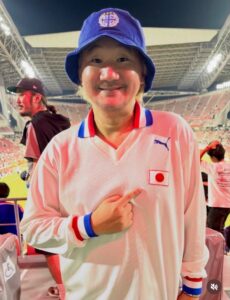
In recognizing the great moments of sportsmanship from the 2026 FIFA World Cup, we are proud to present a Musial Award to Asahi Ueda, founder of the Japanese fan group known as the Nippon Ultras. Asahi is representing the fans of Japan’s national football team – who we celebrate for the class and respect they showed at the host stadiums during the tournament. He is accepting the award on their behalf.
The Nippon Ultras were formed in 1992 and gained international attention in 1998, when Japan first qualified for the World Cup. While Asahi and the Ultras are being honored for starting the trend of cleaning up stands after a game, he said through an interpreter,” We’re soccer fans first, not cleaner-uppers first.” He wants other fans to leave the stadium thinking, “Those Japanese people are a force. They really come out strong.”
A fan of baseball, basketball and wrestling, Asahi travels extensively to support the team and made several trips to the States before the World Cup. His goal was to drum up support for Japan as well as build bridges to other fan groups. Whether fans just want to join the revelry in neutrality or passionately support their own team, he says, “I can be friends with them, too. … It’s not really about separating us from them.”
Though the national team, known at the Samurai Blue, fell short of Asahi’s hopes, the fans extended their reach of enthusiasm and fair play. “The common thread is we all love soccer,” he says.