American Fork (Utah) High School Football Team
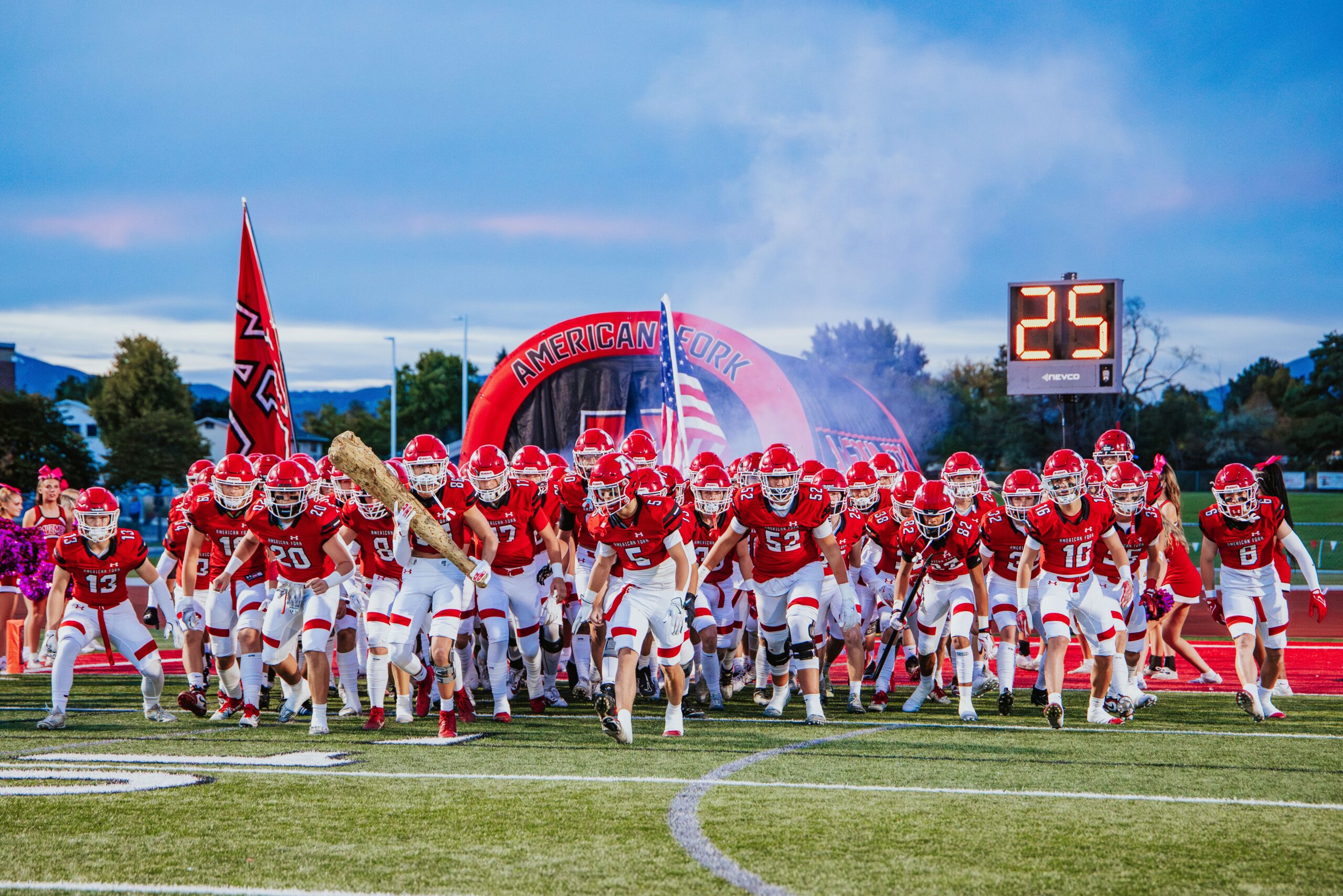 Orien Landis, director of bands at American Fork High School, played on the offensive line of his high school football team. Aaron Behm, American Fork’s football coach, took a few piano lessons, strums a guitar occasionally, and played trombone in his junior high marching band.
“I marched once in my life, in a city parade,” Coach Behm says. “I’d need more than a few lessons if I picked up the trombone again.”
So, each gets the ultimate goal of the other, which extends beyond music and sports. “It’s about students and community,” says Coach Behm, in his 16th year at the school, situated midway between Salt Lake City and Provo, Utah. “We want to guide them to be good people.”
Even before Orien arrived in 2019, Behm exemplified that by supporting the band in a way few, if any, coaches do. For the past nine years, Behm’s football team has dressed in their uniforms, sitting together in the stands and cheering for the band at an annual competition.
This long-overlooked role reversal is more than worthy of a Musial. But, resist the urge to call this a band-aid fix for the silos that separate high school students.
“It’s hard not to get emotional when I remember vividly from my high school days that the football team didn’t give two craps about the band at the game, let alone would they show up to one of their competitions and cheer them on,” Landis says. “I think it speaks to who Aaron is as a coach and a person that he realizes that the community involvement is what we’re trying to teach the kids. The more you’re involved, the more you’re supported, the better the whole school is.”
In American Fork’s case, the band’s performances have elevated the whole school’s reputation. The Marching Cavemen have consistently ranked tops in Utah. Since Landis’ arrival, they also have earned regional or national honors every year in the Bands of America Grand National competition. Last year, they made the finals and starred in an hour-long documentary.
“When we’re working early in the morning and lifting weights, I see the band,” Coach Behm says. “They’re on the field, playing, marching, working out. They devote as much time as we do. They support us and add a huge part to the Friday night football games. I don’t know if we add to the atmosphere at their events, but we see how hard they work and wanted a way to acknowledge that.”
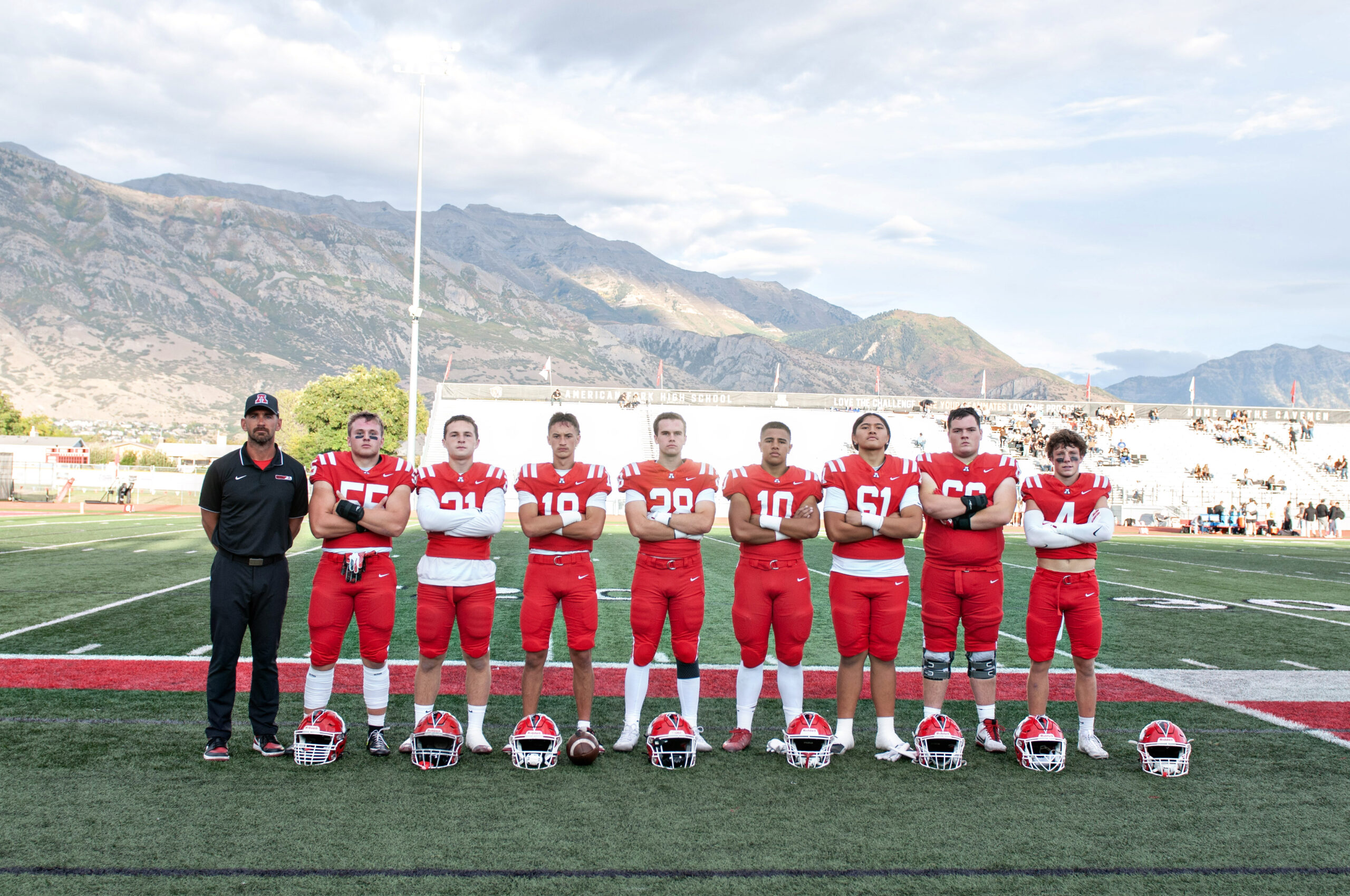
Not until last year had the team’s show of support garnered much attention, when an appreciative band mom posted a video on Instagram of the football team cheering on the musicians. The post eventually inspired a story that was broadcast nationally on ABC.
“My first reaction was ‘That’s nice. Glad they picked up on it.’” Behm says. “But eventually, I was surprised at the number of people who are supportive of it. I think it tells us there’s a gap between different programs, not just at our school, but everywhere.”
Landis hopes that heightened attention leads to more schools following Coach Behm’s lead. “I think that if there were more people invested in this concept like Aaron, students would have a more profound respect for one another, where everybody comes from, and their diverse talents.”
And if Coach Behm ever wants to take another shot at marching with his trombone, Landis says, “I’d take time out of my own schedule to give him a few lessons.”